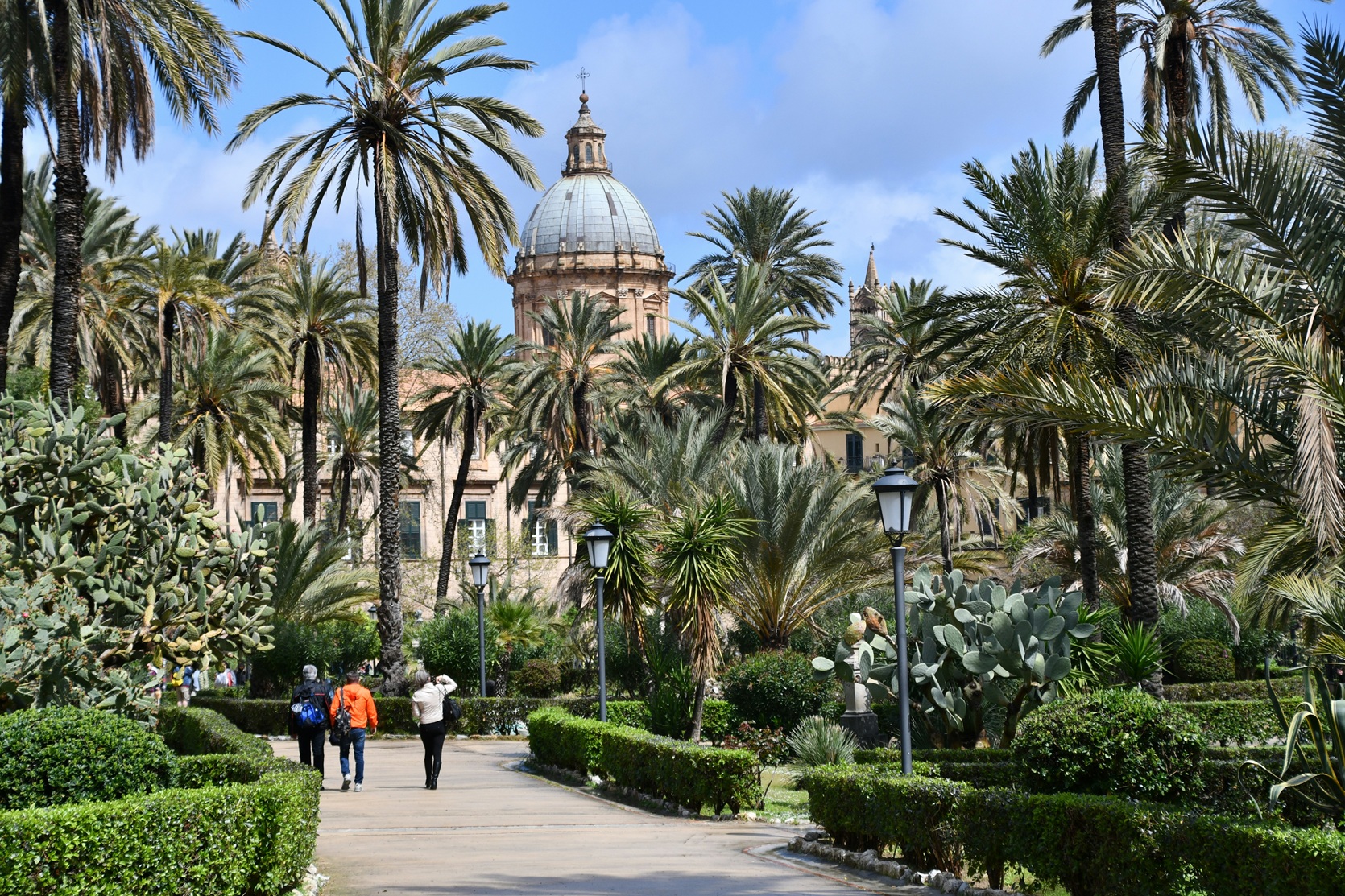
The City of Palermo has unveiled an ambitious urban green plan that marks a strategic shift toward data-driven management of its public tree population. At a press conference held this week at Palazzo Palagonia, Mayor Roberto Lagalla and city officials presented the plan, which includes comprehensive 3D scanning and digital inventorying of street trees, enabled by advanced LiDAR and AI technology provided by R3GIS as the official greehill partner in Italy.
With the scanning, each tree is transformed into a digital twin: a georeferenced 3D model accompanied by biometric data, high-resolution images, and structural information.
The plan represents a substantial investment in the sustainability, safety, and resilience of Palermo’s urban forest. It is structured in multiple phases, with the initial stage focusing on precise mapping and digital documentation of the city’s trees. Using greehill’s LiDAR street-tree scanning system, the city has created a detailed digital street-tree inventory that now covers 20,472 trees from the approximate 31,000 street trees in the city.
Enabling Better Urban Forest Decision-Making
The digital street-tree inventory serves as a working operational tool, not a static report. It enables Palermo’s urban forestry teams to:
Prioritise maintenance and pruning based on measurable conditions;
Detect early structural or health risks to trees before they become public safety issues;
Align canopy planning with local climate resilience goals, identifying areas where shading and cooling benefits are most needed.
The city’s green plan couples this digital foundation with practical action: an initial contract under the municipal programme is set to deliver more than 1,400 targeted pruning operations across Palermo’s street network, with subsequent phases extending to over 8,000 interventions, including new plantings and pedestrian infrastructure improvements.
Italian cities are leading the way on Urban Green Innovation
The 3D scanning launched in Palermo follows experiences already active in cities like Padua, Parma, Roma, Milano, Trieste, Cervia and Siena, where digital twins have already been successfully used to improve safety, respond more quickly to reports, and support urban planning based on scientific data.
Together, we’re helping cities transform their green infrastructure into smarter, healthier, and more sustainable ecosystems.
See how evidence-based insights can make your green infrastructure safer, more efficient, and more resilient. 👉https://www.r3gis.com/greehill